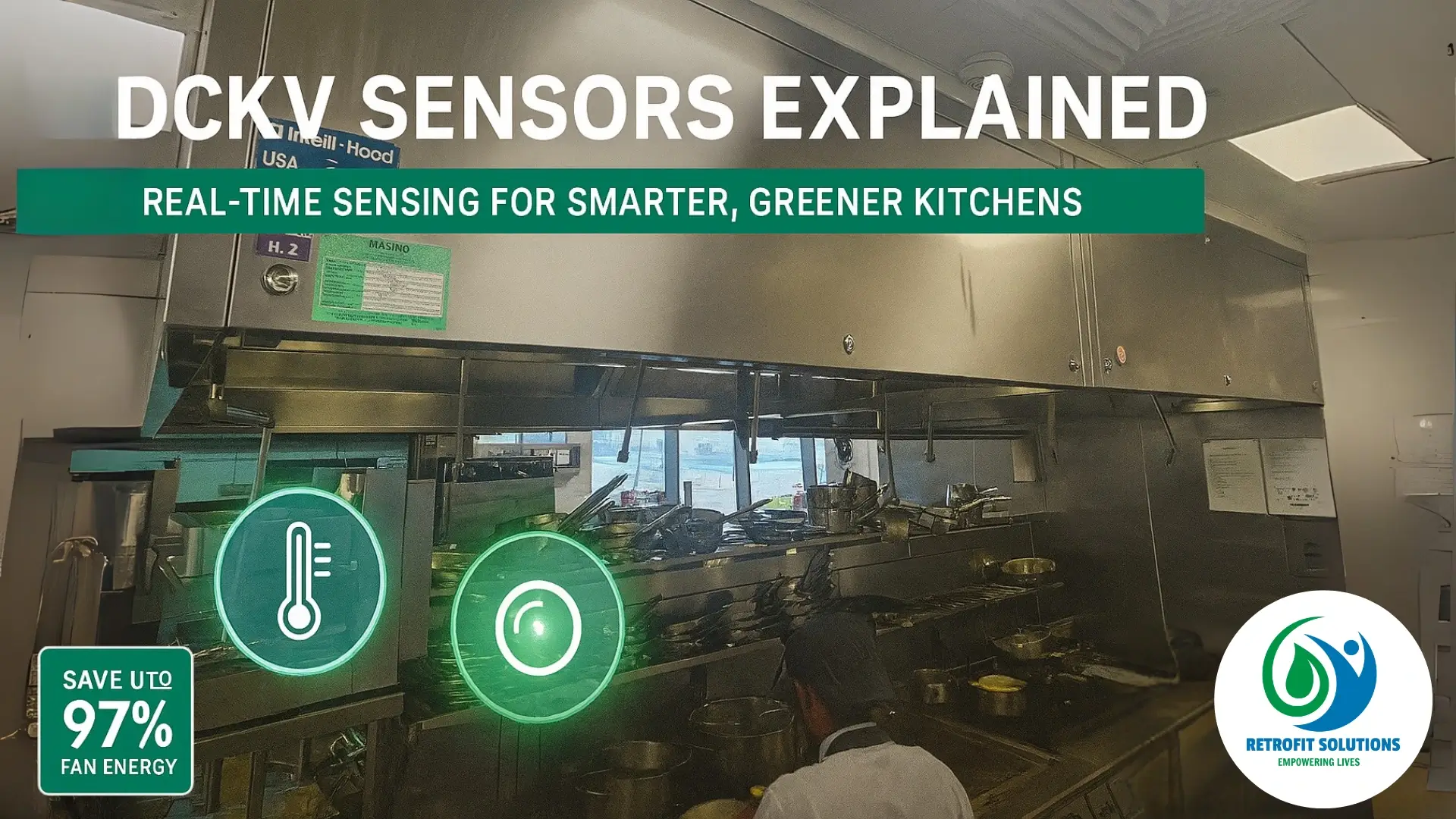
In the bustling commercial kitchens of India, Sri Lanka, Bangladesh, Nepal, the Maldives, and Bhutan, smart ventilation is no longer a luxury—it is the secret to survival against rising energy costs and intense heat. At the heart of that smart ventilation is real-time sensing, the technology that makes a Demand-Controlled Kitchen Ventilation (DCKV) system so effective.
This guide provides a breakdown of DCKV sensors for restaurant owners, facility managers, and hotel engineers across South Asia. By understanding how temperature and optical sensors work inside your hood, you'll see exactly how real-time data keeps your exhaust fans efficient and your kitchen air clean without wasting power—a critical advantage in our tropical climate.
Read on to learn how these sensors detect the intense heat of a tandoor or the smoke from a heavy tadka in real time, adjust fan speeds automatically, and deliver measurable energy savings through Retrofit Solutions.
What Are DCKV Sensors?
DCKV sensors are the core technology that makes a smart kitchen ventilation system work. While traditional systems run at 100% capacity all day, DCKV sensors allow the system to "think." These sensors are usually a mix of temperature sensors and optical sensors installed inside the hood canopy near the cooking line.
- Temperature Sensors: Monitor heat levels rising from appliances like tandoors, grills, and gas ranges.
- Optical Sensors: Detect smoke, steam, and airborne particulates—crucial for South Asian cooking where steam (from rice/curries) and smoke (from frying/tempering) are common.
Together, they feed real-time data to a control panel, which uses this information to increase or reduce exhaust fan speed as needed.
Why This Matters for South Asia
The "always-on" approach to ventilation is particularly wasteful in South Asia for two reasons:
- High Ambient Heat & Humidity: In countries like India, Sri Lanka, and the Maldives, your HVAC system is already fighting a battle against the tropical climate. Running exhaust fans at full speed sucks out expensive conditioned air (AC), forcing your cooling plant to work overtime.
- Diverse Cooking Styles: A kitchen in Dhaka or Kathmandu might switch between low-heat prep and high-intensity frying instantly. A static fan cannot adapt to this, but sensors can.
How Real-Time Sensing Works
So, how does real-time sensing actually work in practice? In a DCKV system installed by Retrofit Solutions, sensors constantly gather data from the hood interior while cooking is happening.
- Detection: When cooking activity increases—like when fryers are loaded or a tandoor is fired up—temperature sensors detect the heat spike, and optical sensors pick up the visible smoke and vapor.
- Reaction: The system's controller uses this live data to automatically increase exhaust fan speed and make-up air supply to 100% (or whatever level is needed) to capture the effluent.
- Conservation: When the lunch rush in Mumbai ends or the dinner service in Colombo winds down, the sensors detect lower heat and smoke levels. They signal the fans to ramp down to a minimum safe speed (often as low as 10-30%).
This smart response is what unlocks the true benefits of DCKV: less wasted energy, lower noise, and consistent kitchen comfort.
Benefits of Real-Time Sensing with Retrofit Solutions
When you understand how these sensors work, the advantages for the South Asian market are clear. Real-time sensing delivers precise fan speed control only when it's needed—cutting unnecessary energy waste.
1. Massive Energy Efficiency
Fans run at reduced speeds during low cooking activity (prep time, plating), saving up to 97% in fan energy. More importantly for humid regions like Bangladesh and Sri Lanka, it reduces the load on your air conditioning by preventing the unnecessary exhaust of cooled air.
2. Better Indoor Air Quality (IAQ)
South Asian kitchens generate heavy smoke and spices that can irritate staff. Optical sensors respond instantly to rising smoke, keeping the air clear and safe for your culinary team.
3. Lower Maintenance Costs
With fans and motors working only as needed rather than running at full blast 24/7, wear and tear drops significantly. This extends the life of your equipment—a vital cost-saving measure for businesses in Nepal and Bhutan where sourcing spare parts can sometimes be challenging.
4. Quieter Kitchens
Fewer noisy fans at full blast mean a quieter kitchen. This improves communication between chefs and creates a better environment for staff morale.
The "Retrofit" Advantage: Upgrade Without Replacing
Many kitchen operators in the region assume that to get this technology, they need to rip out their entire hood system. This is a myth.
At Retrofit Solutions, we specialize in retrofitting DCKV sensors onto existing hoods. Whether you run a heritage hotel in Rajasthan or a cloud kitchen in Male, we can install the sensor array and control panel into your current setup.
- No downtime: Installation is quick and non-intrusive.
- Lower CAPEX: You don't pay for new steel hoods, only the smart technology.
- Immediate ROI: Most projects in the region see a return on investment in less than two years due to electricity savings.